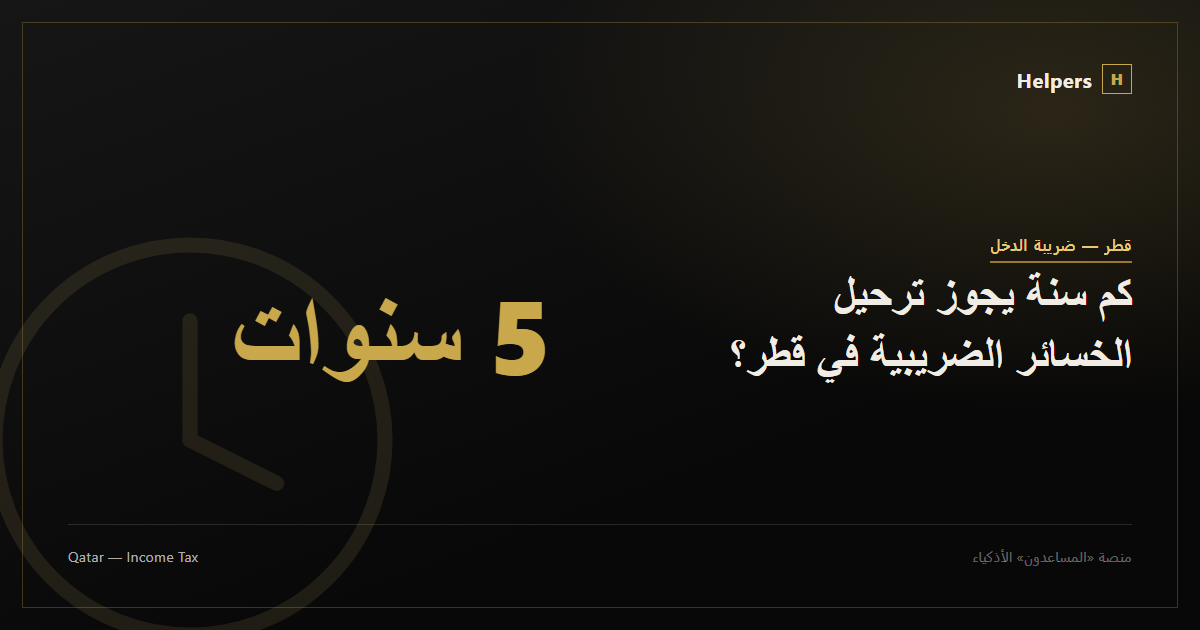
Qatar's Income Tax Law allows a taxpayer to deduct tax losses incurred during a given tax year from the net income of subsequent years. The law's executive regulations place a time limit on this carryforward: losses may not be carried forward for more than 5 years starting after the end of the tax year in which the loss was incurred.
The Taxpayer's Right to Carry Forward Losses
The law provides that taxable income is determined on the basis of the gross income arising from all transactions carried out by the taxpayer, after deducting allowable deductions and the losses provided for in the law, and that the taxpayer may deduct losses incurred during the tax year from the net income of subsequent years.
The Maximum Carryforward Period: 5 Years
The executive regulations provide that the taxpayer may deduct losses incurred during the tax year from the net income of subsequent years, provided that losses are not carried forward for more than 5 years starting after the end of the tax year in which they were incurred. Consequently, a loss incurred in a given tax year may not be deducted from the income of any year falling after this period has elapsed.
Exception: Losses From an Exempt Source of Income
The executive regulations also require that losses arising from a source of income that is exempt from tax or not subject to it may not be deducted, so that the right to carry forward is limited to losses arising from an activity that is originally subject to tax.
The Deductions From Which a Loss Arises
Determining the loss eligible for carryforward is tied to the same rules the law sets for allowable deductions when computing taxable income. Allowable deductions mean the expenses and costs incurred by the taxpayer that meet the following conditions: they must be necessary to generate gross income, they must have been actually incurred and supported by documents, they must not increase the value of the fixed assets used in the activity, and they must relate to the relevant tax year. Where the total of such expenses and costs exceeds the taxpayer's gross income in a given year, the loss that may be carried forward under the conditions described above arises.
The Relationship With Tax Assessment and Limitation Periods
The calculation of the loss carryforward period is tied to the annual tax return the taxpayer is required to file, and to the tax assessment rules applied by the Authority on the basis of the taxable income shown in that return, while the Authority retains the power to amend the assessment or make an estimated assessment in the cases specified by the law.
Legal References
- Law No. (24) of 2018 Promulgating the Income Tax Law — Article 7
- Law No. (24) of 2018 Promulgating the Income Tax Law — Article 14
- Law No. (24) of 2018 Promulgating the Income Tax Law — Article 7 (second paragraph)
- Cabinet Decision No. (39) Issuing the Executive Regulations of the Income Tax Law promulgated by Law No. (24) of 2018 — Article 5/4
For questions about your specific situation, you can ask the Qatar Tax & Legislation Helper on Helpers, or consult a licensed chartered accountant.