A taxpayer's gross income in Jordan may be reduced by deductible expenses that were incurred or accrued wholly and exclusively during the tax period to produce taxable income, while the Law expressly bars the deduction of certain items such as tax, fines, the cost of capital assets, and personal expenses.
The General Rule for Deductible Expenses
Article 6 of the Income Tax Law provides that a taxpayer may deduct accepted expenses, including those listed in that same article, with a regulation to determine the provisions and procedures for this deduction. Among the expenses expressly accepted are bad debts previously included in gross income, and marketing, scientific research, development and training expenses.
Restrictions on Deducting Interest Paid to Related Parties
The Law allows the deduction of interest and murabaha profits paid or accrued to related parties, but requires that the deductible amount not exceed a debt-to-paid-up-capital (or average equity, whichever is greater) ratio of three to one, and any excess interest or murabaha profit above this limit may not be deducted or carried forward.
Depreciation of Capital Assets
The Law allows the deduction of depreciation of capital assets and amortization of intangible assets, including goodwill, used to produce taxable income, as well as natural-resource exploration expenses, but it expressly bars depreciating the value of land and any other assets that do not lose value over time.
Expenses Expressly Barred From Deduction
Article 7 of the Law lists expenses that a taxpayer may not deduct under any circumstances, most notably: tax, fines and other amounts due under the Law; penal fines and amounts paid as civil compensation; the cost of capital assets and their installation and the cost of intangible assets; and household, personal or private expenses.
The Law also bars deducting more than 5% of the taxable income of a foreign legal person's branch in respect of its share of head-office expenses located outside the Kingdom.
The Donation Cap and the Expense Limit for Non-Compliant Records
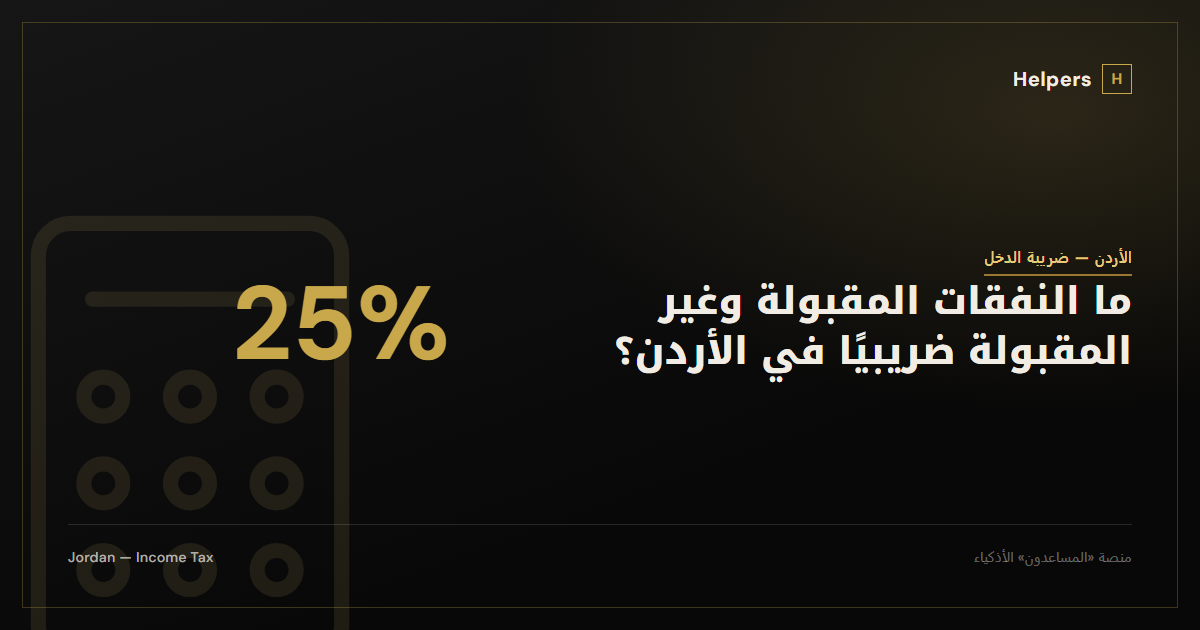
The Law allows the deduction of donations and subscriptions paid within the Kingdom without personal benefit for religious, charitable, humanitarian, scientific, environmental, cultural, sports or professional purposes if the Council of Ministers has recognized that status, provided that the amount deducted on this basis does not exceed 25% of taxable income before making this deduction.
The Regulation on Expenses, Provisions, Depreciation and Exemptions further provides that accepted expenses are deducted up to no more than 50% of gross income as computed under the applicable profit-ratio rules, for taxpayers who do not comply with the record-keeping requirements of the Law.
Legal References
- Income Tax Law No. 34 of 2014 — Article 6 (deductible expenses, the related-party interest limit, and depreciation).
- Income Tax Law No. 34 of 2014 — Article 7 (non-deductible expenses).
- Income Tax Law No. 34 of 2014 — Article 10 (the donation deduction cap).
- Regulation No. 55 of 2015 on Expenses, Provisions, Depreciation and Exemptions — Article 3(b) (the 50% limit for taxpayers without compliant records).
For questions about your specific situation, you can ask the Jordan Tax & Legislation Helper on Helpers, or consult a licensed chartered accountant.