The Saudi Income Tax Law allows the deduction of all ordinary and necessary expenses for producing taxable income, while disallowing specific categories of expenses, such as benefits to partners, entertainment expenses, tax paid, and fines.
The General Rule: Deductible Expenses
All ordinary and necessary expenses for producing taxable income, whether paid or accrued, and incurred during the tax year, are deductible in computing the tax base, except for expenses of a capital nature and other expenses that the Law does not allow to be deducted.
Non-Deductible Expenses
The following expenses, among others, may not be deducted:
- Expenses not related to producing taxable income.
- Any amounts paid or benefits provided to a shareholder or partner, or to a relative of theirs, if they represent salaries, wages, remuneration, or similar, or do not meet the arm's-length conditions for transactions in return for property or services.
- Entertainment expenses.
- Income tax paid in the Kingdom or in another country.
- Fines or financial penalties paid, or payable, to any party in the Kingdom, except amounts paid for a breach of contractual terms and obligations.
Deducting Donations
In determining a taxpayer's tax base, donations paid during the tax year to public bodies, or to non-profit charitable associations licensed in the Kingdom that are permitted to receive donations, may be deducted.
Deducting Pension Fund Contributions
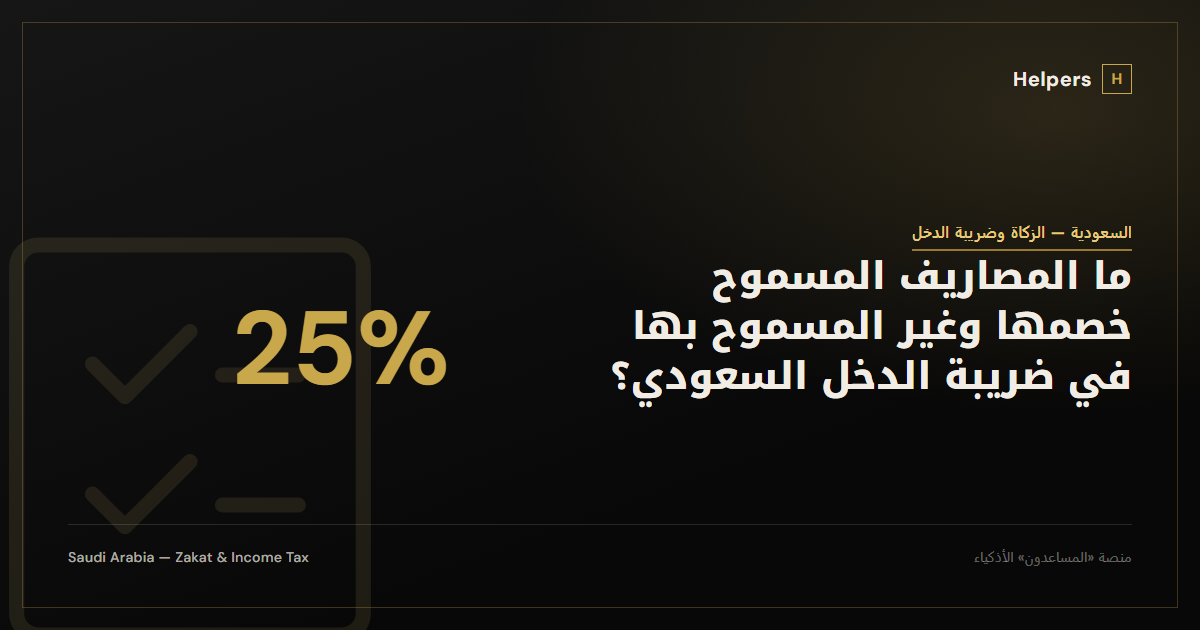
An employer's contributions on behalf of an employee to a regular pension fund established under the Kingdom's regulations may be deducted, provided the allowed deduction for each employee does not exceed 25% of his income before taking the employer's contributions into account; the employee's own contributions to that fund may not be deducted.
Deducting Bad Debts
A taxpayer may deduct bad debts arising from the sale of goods or the provision of services previously declared as revenue within its taxable income, provided there is appropriate evidence that collection is impossible, completing the system of allowable deductions alongside operating expenses, donations, and pension contributions.
Why Distinguishing Deductible from Non-Deductible Expenses Matters
Carefully distinguishing between deductible and non-deductible expenses helps businesses avoid having certain expenses rejected by the Department during an audit, particularly transactions with shareholders and partners that do not meet arm's-length conditions. Knowing the limits on deducting donations and pension contributions also allows businesses to plan their corporate social responsibility policies and employee benefits with an awareness of their effect on the tax base.
The Effect of These Rules on Legitimate Tax Planning
Knowing the boundaries between deductible and non-deductible expenses helps businesses document their related-party transactions in line with arm's-length conditions, and keep supporting documentation for donations and pension contributions in a form the Department accepts during an audit, rather than assuming a deduction is allowed without adequate documentation.
Legal References
- Income Tax Law, Article Eleven, Article Twelve, Article Thirteen, Article Twenty, and Article Fourteen.
For questions about your specific situation, you can ask the Saudi Arabia Tax & Legislation Helper on Helpers, or consult a licensed chartered accountant.